
Why Choosing the Right AC System for a Small Home Matters
Spring has a way of reminding homeowners across Rhode Island and Southeastern Massachusetts just how quickly warm weather arrives. One week you’re running the heat, and the next you’re opening every window in the house trying to cool things down. For homeowners in smaller homes, older houses, or spaces without ductwork, that transition can be especially uncomfortable.
Choosing the wrong cooling system for a small home often leads to higher energy bills, uneven temperatures, and maintenance costs that add up faster than expected. Traditional central air systems work well in larger homes with existing ductwork, but many smaller houses and older homes simply weren’t built with ducts in mind. Retrofitting ductwork into these spaces can be expensive, disruptive, and sometimes impractical.
That’s why more homeowners across East Bay, Aquidneck Island, Jamestown, and out to Westport are turning to ductless mini-split systems as an efficient and flexible cooling solution. If you’ve been searching for the best AC system for a small home, a ductless mini-split is often one of the most practical and energy-efficient options available.
What Is a Ductless Mini-Split System?
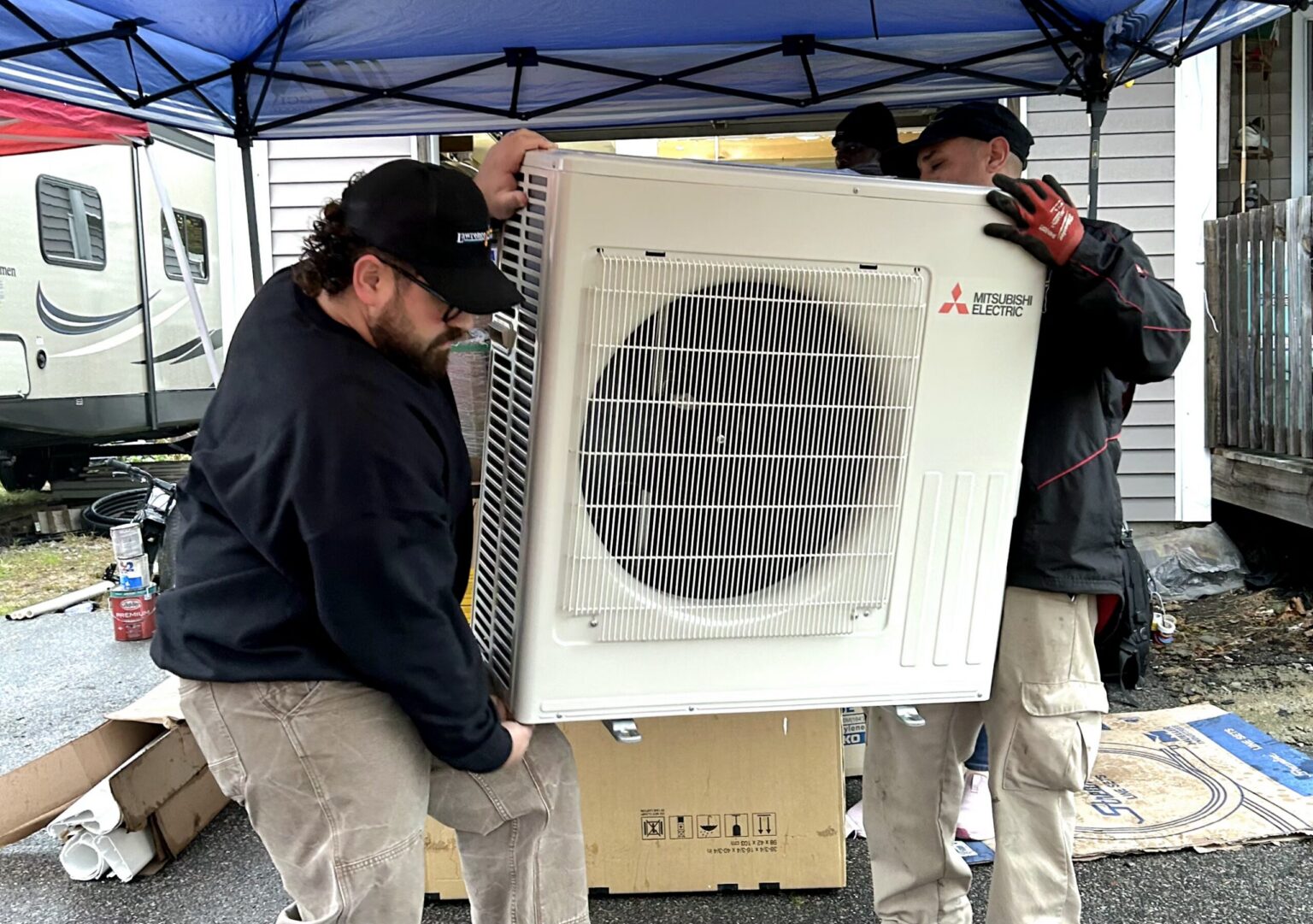
A ductless mini-split system is a type of air conditioning system that does not require ductwork. Instead, it uses two main components: an outdoor condenser unit and an indoor air handler mounted on the wall or ceiling. These components are connected through a small conduit that carries refrigerant and electrical lines.
Because they don’t rely on ducts, mini-splits allow homeowners to cool individual rooms or zones independently. This makes them particularly effective for smaller homes where efficient temperature control is important.
Modern cold-climate mini-split systems — like the Mitsubishi Electric Hyper-Heating units installed by Diamond Contractor Elite dealers — are engineered to deliver powerful cooling and heating performance without major home modifications.
Why Mini-Split Systems Are Ideal for Small Homes
No Ductwork Required
Many small homes, especially older ones in Rhode Island and Southeastern Massachusetts, were built without duct systems. Installing ductwork can involve opening walls, major renovation work, and significantly higher installation costs.
Ductless mini-splits eliminate that problem entirely. Your system requires only a small wall opening to connect the indoor and outdoor units, making installation faster and far less disruptive to your home.
Higher Energy Efficiency
Traditional HVAC systems can lose 20–30% of cooling energy through ductwork due to leaks and poor insulation. Ductless systems avoid this energy loss because conditioned air is delivered directly into the room.
The result is lower electricity bills, reduced energy waste, and more consistent cooling throughout the day. Many mini-split systems also feature inverter technology, which adjusts cooling output automatically instead of constantly cycling on and off like traditional systems. That’s the kind of smart efficiency that keeps comfort high without running up your bill.
Zoned Temperature Control
One of the biggest advantages of mini-split systems is zoning capability. Instead of cooling the entire home at once, mini-splits allow you to control temperatures in individual rooms.
Keep bedrooms cooler at night, adjust temperatures in rarely used rooms, or reduce cooling in empty areas of the home. This level of control helps improve comfort while reducing energy use — and for multi-level homes, it can finally end the “upstairs is July, downstairs is March” problem.
Quiet Operation
Traditional central air systems can produce noticeable noise when the compressor kicks on. Ductless systems are known for quiet operation, making them ideal for bedrooms, home offices, nurseries, and small apartments.
Most of the noise-producing equipment is located outside the home, while indoor units operate at whisper-quiet levels that most homeowners forget are even running.
Faster Installation
Central AC systems often require several days of work if ductwork needs to be added. In many cases, a mini-split installation can be completed more quickly, depending on the number of indoor units.
A system designer evaluates your space first, then professional technicians handle mounting indoor air handlers, installing refrigerant lines, connecting electrical components, and testing system performance before they leave.
Where Ductless AC Systems Work Best
Mini-split systems are versatile and can be installed in many types of homes. They are especially useful for:
Older homes without ductwork. Many historic homes across East Bay, Newport, and Bristol were built long before central HVAC systems existed. Mini-splits provide modern cooling without damaging the structure.
Small homes and condos. Compact homes benefit from the efficiency and space-saving design of ductless systems.
Home additions. New additions often require extra cooling, but extending existing ductwork isn’t always practical. A mini-split gives the new space its own independent comfort zone.
Converted spaces. Attics, garages, basements, and guest rooms that were never part of the original HVAC plan are ideal candidates for ductless solutions.
How Professional Mini-Split Installation Works
Professional installation ensures your system operates efficiently and safely from day one. Here’s what the process typically looks like:
Home evaluation. A system designer evaluates your home’s layout, insulation, and cooling needs to recommend the right solution — because bigger is not always better. Proper load calculations matter.
System sizing. The system is sized to match your home’s actual cooling demand. A system that’s too large or too small will reduce efficiency and shorten equipment life.
Indoor unit placement. Air handlers are positioned for optimal airflow and coverage in each zone.
Outdoor unit installation. The condenser is installed outside the home in a stable, well-ventilated location.
System testing. Once installed, technicians test the system to ensure proper cooling performance before the job is complete.
Midpoint Insight: Why the Right Installation Partner Matters
Not all mini-split installations are created equal. The equipment is only as good as the team sizing and installing it. Refrigerant handling, electrical connections, and proper vacuum sealing all require trained professionals — and cutting corners on any of these can reduce efficiency, void manufacturer warranties, and shorten the life of the system.
This is why homeowners across East Bay, Aquidneck Island, Jamestown, and out to Westport often work with experienced providers like Lawrence Air Systems for ductless installations. As a Mitsubishi Electric Diamond Contractor Elite dealer, the team has the hands-on experience and factory training to make sure your system is sized, installed, and performing the way it should — backed by warranty coverage of up to 12 years.
Maintenance Tips for Ductless Mini-Split Systems
Routine care helps keep your system running efficiently season after season. Homeowners can handle a few simple tasks on their own:
Clean or replace filters. Most mini-split systems have washable filters that should be cleaned every few weeks during heavy use.
Keep outdoor units clear. Remove leaves, dirt, and debris from around the condenser unit so airflow isn’t restricted.
Check for airflow obstructions. Make sure furniture or curtains aren’t blocking indoor units.
Schedule a professional Total System Cleaning. Annual professional care ensures components are working correctly, catches wear issues early, and helps prevent unexpected repairs. Members of the Annual Maintenance Program receive priority scheduling, member-only savings on service calls and repairs, and access to after-hours service.
When to Consider Installing a Ductless AC System
If you’re unsure whether a mini-split system is right for your home, consider a few key questions. Does your home lack ductwork? Do certain rooms stay warmer than others? Are your energy bills higher than expected? Are you planning a home addition or renovation?
If the answer to any of these is yes, a ductless mini-split system may be the ideal solution. And spring is a smart time to plan — installation schedules fill up quickly once summer hits, and acting now means your home is comfortable before the first real heat wave.
Choosing the Right Mini-Split System
Not all systems are the same. When choosing a mini-split system, homeowners should consider:
Cooling capacity. Measured in BTUs, this determines how effectively the system can cool a space.
Energy efficiency ratings. Higher SEER ratings indicate better energy efficiency and lower long-term operating costs.
Number of zones. Some systems support multiple indoor units connected to a single outdoor condenser, so you can cool the whole home from one system.
Smart features. Many modern systems offer remote controls, programmable timers, and smartphone integration for convenience.
Working with an experienced system designer — not just an order-taker — can help ensure the system selected is properly matched to your home’s size, layout, and cooling needs.
FAQ
Are ductless mini-split systems expensive to run?
In many cases, mini-split systems are more energy-efficient than traditional HVAC systems, which can lead to noticeably lower energy costs — especially in homes where duct losses were driving up bills.
How long do ductless AC systems last?
With proper maintenance, mini-split systems can last 15–20 years. Enrolling in an Annual Maintenance Program helps extend that lifespan even further.
Can mini-splits cool an entire house?
Yes. Multi-zone systems can cool multiple rooms throughout the home, each with independent temperature control.
Do ductless systems also provide heating?
Many mini-split systems function as heat pumps, providing both heating and cooling. Cold-climate models like Mitsubishi Electric’s Hyper-Heating systems are designed to perform efficiently even in New England winters.
How long does mini-split installation take?
Installation timelines vary depending on the number of indoor units and the layout of the home. A system designer can give you a clear picture during the evaluation.
Are mini-splits good for small homes?
Yes. Their energy efficiency, zoning capabilities, and compact design make them one of the best AC systems for small homes — especially those without existing ductwork.
Your Comfort, Your Way
Choosing the right cooling system is one of the smartest investments a homeowner can make — especially in a smaller home where every degree and every dollar counts. Ductless mini-split systems offer powerful cooling, flexible installation, and precise temperature control without the need for extensive ductwork.
If you’re ready to explore whether a ductless system is right for your home, the experienced team at Lawrence Air Systems can help homeowners across East Bay, Aquidneck Island, Jamestown, and out to Westport evaluate their space, understand available incentives, and design a cooling solution tailored to their home. Call(401) 227-5410 to schedule a complimentary consultation and take the next step toward smarter comfort this spring.
Follow us on Facebook for seasonal tips, team updates, and homeowner resources.