
TL;DR
- Furnaces and boilers typically last 15 to 25 years with regular care; heat pumps typically last 10 to 15 years. Once you’re near those marks, start planning instead of waiting for a failure.
- September gives you the first pick of installation dates. By November, schedules fill up with homeowners reacting to a system that just quit.
- Rising bills, frequent repairs, uneven heating, and new noises are the four signals worth acting on now.
- A common rule of thumb: if a repair quote runs 50% or more of a new system’s cost, replacement is usually the smarter investment.
- Federal tax credits for heating equipment ended for anything installed after December 31, 2025. Current incentives run through Mass Save (Massachusetts) and Clean Heat RI (Rhode Island), plus Wells Fargo financing.
- Correct sizing, not the biggest unit you can afford, is what actually determines comfort and efficiency.
By the time September settles into New England, the mornings start carrying that first hint of cold, and most homeowners quietly wonder the same thing: will the furnace make it through another winter? If your system struggled last February, ran constantly, or needed more than one repair call, that question deserves a real answer before the weather forces one on you.
Why September Beats November for This Decision
September isn’t just a calendar milestone. It’s the window when replacing a heating system is a choice you get to make on your own schedule, rather than a decision made for you by a breakdown in January.
Heating replacement demand follows a predictable curve. Once temperatures drop and furnaces start failing, service calls spike, installation crews book out weeks in advance, and popular equipment models can be back-ordered. Homeowners who wait until the first cold snap are choosing from whatever’s available, on whatever timeline a contractor can offer them.
Acting in September means:
- More open installation dates, including the ability to schedule around your own calendar rather than an emergency queue
- Equipment availability before manufacturer lead times stretch out heading into peak season
- Time to actually compare furnace, boiler, and heat pump options instead of grabbing the fastest fix available
- A calmer, more thorough evaluation, since nobody is standing in a cold house making a rushed decision
The best emergency is the one that never happens, and a September evaluation is how you make sure this winter isn’t the one where it does.
The Real Signs Your Heating System Is Telling You It’s Done
Age is the starting point, but it’s not the only signal. ENERGY STAR’s guidance on when to replace heating equipment points to furnaces and boilers over 15 years old and heat pumps over 10 years old as the range where replacement starts making more sense than continued repair. Properly maintained systems in New England often run 15 to 25 years for furnaces and boilers, with heat pumps more typically landing in the 10-to-15-year range.
Beyond age, watch for these patterns:
Rising bills without a clear reason. If your usage habits haven’t changed but your heating costs keep climbing, your system is losing efficiency, not gaining age gracefully. Heating and cooling already make up a large share of a typical home’s annual energy costs, so a system that’s quietly losing efficiency shows up on your bill before it shows up as a breakdown.
Repairs becoming routine. One repair in a decade is normal wear. Two or more in a single heating season is a system telling you it’s tired, not just having an off year.
Uneven heat throughout the house. Some rooms warm, others stubbornly cold, even with the system running constantly. That’s a sign the equipment, or the ductwork feeding it, can no longer keep up with your home’s actual heating demand.
New noises or smells. Banging, screeching, or a burning odor on startup are worth a professional look before they become a mid-winter failure rather than an inconvenience you can plan around.
Repair or Replace? A Simple Way to Decide
Not every issue means a full replacement. But when a repair estimate starts approaching half the cost of a new system, most homeowners find that money is better spent moving forward rather than patching a system that’s already on borrowed time. Combine that math with the age benchmarks above, and the decision usually becomes clear rather than agonizing.
It also helps to think about frequency, not just cost. A single $400 repair on a 12-year-old furnace is very different from a third $400 repair in two winters on the same unit. The second scenario is a pattern, and patterns are what actually predict the next failure.
What a Professional Heating Evaluation Actually Checks
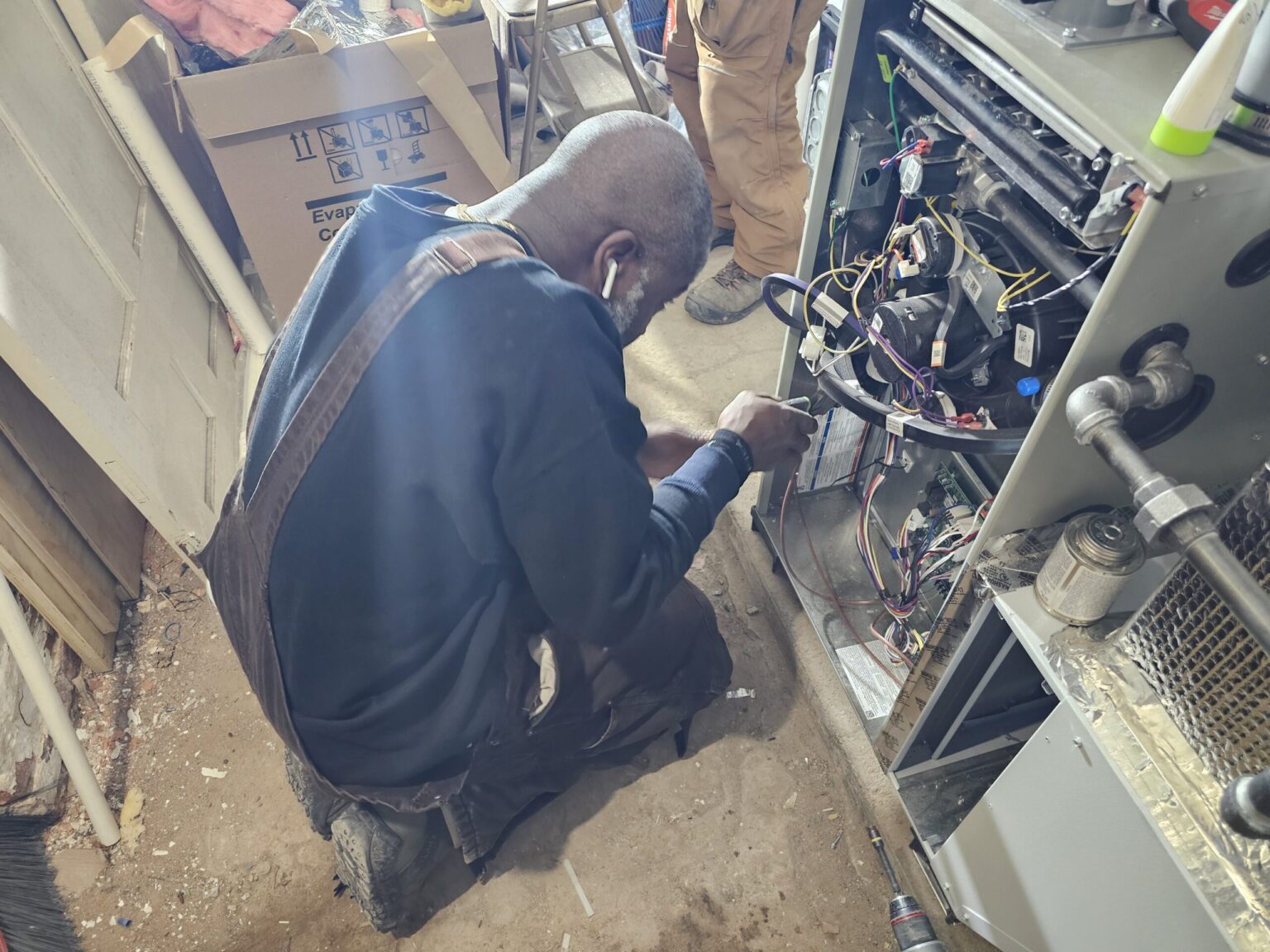
A real evaluation goes well beyond a visual glance at the unit. Depending on your system type, a thorough check typically includes combustion efficiency testing, a look at heat exchanger condition, electrical connections, safety controls, and airflow across the whole system, not just at the unit itself. This is also where NCI Combustion Efficiency Certified testing matters: it measures how completely your system is actually burning fuel, which tells you far more about real-world efficiency than the age of the unit alone.
This kind of evaluation is also how a homeowner finds out whether a system just needs a repair, or whether the underlying components are wearing out together, which is usually the clearer sign that replacement makes more sense than another patch.
Simple Checks You Can Do Before Calling a Professional
Before scheduling a full evaluation, a few basic checks can rule out simple causes:
- Confirm the thermostat is set to “heat” and the batteries (if any) aren’t low
- Check that your air filter isn’t visibly clogged, since restricted airflow makes any system work harder and can mimic bigger problems
- Make sure vents and returns throughout the house are open and unblocked by furniture or rugs
- Check your breaker panel or, for gas systems, confirm the pilot light or ignition system is functioning
If everything checks out and the system still isn’t performing the way it should, that’s the point where a professional evaluation, not another round of guessing, is the right next step.
Why Homeowners Across New England Plan Ahead in September
Timing a heating replacement well takes more than knowing your system’s age. It takes understanding how it’s actually performing under real demand, not just whether it turns on. This is why homeowners across East Bay, Aquidneck Island, Jamestown, and out to Westport rely on the experienced team at Lawrence Air Systems for September evaluations, the same reason Rhode Island homeowners have trusted Lawrence Air Systems for HVAC service for decades. Technicians assess your current heating systems, measure performance against what the equipment should be delivering, and lay out real options, not a pressured upsell, before the season narrows your choices.
Why Sizing Matters More Than the Sticker Price
A heating system that’s too large for your home cycles on and off constantly, wastes energy, and wears out faster. One that’s too small runs nonstop and still can’t keep up on the coldest nights. Getting this right requires an actual evaluation of your home’s insulation, layout, and heat loss, not a rule-of-thumb swap of “the same size as what’s there now,” which is often wrong to begin with, especially in older New England homes that have had windows, insulation, or additions changed over the decades.
Bigger is not automatically better here. A correctly sized system, running steadily rather than constantly cycling, is both more comfortable to live with and less expensive to operate over its lifetime.
Financing and Incentives: What’s Actually Available in 2026
Here’s where it’s worth being precise, because a lot of outdated information is still floating around: the federal 25C tax credit for high-efficiency heating equipment expired for anything installed after December 31, 2025. If you see a source promising a federal credit for a 2026 furnace or heat pump, it’s not accurate anymore.
What’s actually available:
- Massachusetts homeowners can look into Mass Save’s heat pump rebate program, which offers tiered rebates based on how much of your home’s heating load a heat pump will serve.
- Rhode Island homeowners have Clean Heat RI, a state-sponsored incentive program for households moving from oil, propane, or natural gas to efficient electric heating and cooling.
- Financing is available through Wells Fargo Bank, N.A. for homeowners who want to spread the cost of a replacement over time rather than paying it all upfront.
Incentive programs also run on annual budgets and deadlines, which is another reason not to wait until the last minute. Funding can be allocated well before the calendar year ends.
Furnace, Boiler, or Heat Pump: Which Replacement Makes Sense?
This depends on your home’s existing setup and what you’re trying to solve.
Replacing a furnace with a furnace is often the most straightforward option if your ductwork is in good shape and you want to keep the same fuel source and general system design.
Boiler replacement matters most for homes with radiators or baseboard heat, where the boiler itself, not the distribution system, is usually the aging component driving efficiency loss.
Heat pumps are worth a serious look for homeowners interested in a single system that handles both heating and cooling, especially paired with the rebate programs above.
Whatever direction fits your home, our Annual Maintenance Program helps new equipment actually reach the upper end of its expected lifespan, and our full range of equipment brands gives you real options to compare rather than a single default choice.
What a September Installation Timeline Looks Like
Most single-system replacements, a furnace or boiler swap without major ductwork changes, can be completed in a day. More involved projects, like adding zoning or converting to a heat pump system, take longer and benefit from the extra planning time September provides.
A typical September timeline looks something like this: an in-home evaluation and sizing assessment, a written comparison of equipment options and financing or rebate eligibility, then a scheduled installation date that works around your calendar rather than an emergency slot. Either way, scheduling now means your system is fully operational and tested well before the first real cold arrives.
Frequently Asked Questions
How do I know if I need a new furnace or just a repair?
Start with age (15 or more years for furnaces and boilers, 10 or more for heat pumps) and the 50% rule: if a repair costs half or more of a replacement, replacement is usually the better long-term investment. Frequency matters too, since repeated repairs in a short span are a stronger signal than one isolated repair.
How long do furnaces and boilers actually last in New England homes?
With regular professional care, most furnaces and boilers run 15 to 25 years, and heat pumps typically run 10 to 15 years. Homes with inconsistent maintenance, or systems that have been running without any professional evaluation, tend to fall toward the shorter end of that range.
Is a heat pump a good replacement for an old furnace?
For many homes, yes, especially if you also want a single system that provides cooling in summer. It depends on your home’s insulation, layout, and existing ductwork, which is why a proper evaluation matters more than a generic recommendation.
What rebates are available in Rhode Island and Massachusetts in 2026?
Massachusetts homeowners can look into Mass Save’s heat pump rebate tiers. Rhode Island homeowners have Clean Heat RI. Both are separate from financing options like Wells Fargo, and eligibility depends on your current heating fuel source and equipment choice.
Are federal tax credits still available for heating system replacement?
No. The federal 25C tax credit expired for equipment installed after December 31, 2025. It no longer applies to 2026 installations, regardless of what older articles or contractor quotes may still say.
How long does a heating system replacement take?
A straightforward furnace or boiler swap is often a single-day job. Heat pump conversions or zoning additions typically take longer, depending on the scope of the project and any ductwork changes involved.
Should I replace my furnace before it fully breaks down?
Planning ahead, especially in September, means you choose the timeline, the equipment, and the installer, rather than reacting to a mid-winter failure during the coldest, busiest weeks of the season.
What size heating system does my home need?
That requires an actual evaluation of your home’s insulation, layout, and heat loss. “The same size as what’s there now” is often the wrong answer, especially in older homes that have had windows, insulation, or additions changed over time.
A Decision Worth Making on Your Own Terms
A heating system rarely fails at a convenient time. Acting in September means you’re the one setting the terms, the timeline, the equipment, and the installer, instead of scrambling during the first hard freeze. If your system is showing its age or already had a rough winter, the experienced team at Lawrence Air Systems is ready to help homeowners across East Bay, Aquidneck Island, Jamestown, and out to Westport evaluate their options honestly.
Call(401) 227-5410 to schedule a complimentary consultation before the fall rush fills the calendar.