
TL;DR
- Modern cold-climate mini-splits are engineered to keep producing heat well below 5°F. They’re not the same technology homeowners may remember from a decade ago.
- “Cold climate rated” isn’t marketing language. It refers to a specific performance standard, a coefficient of performance of at least 1.75 at 5°F, maintained by NEEP, a regional energy efficiency authority.
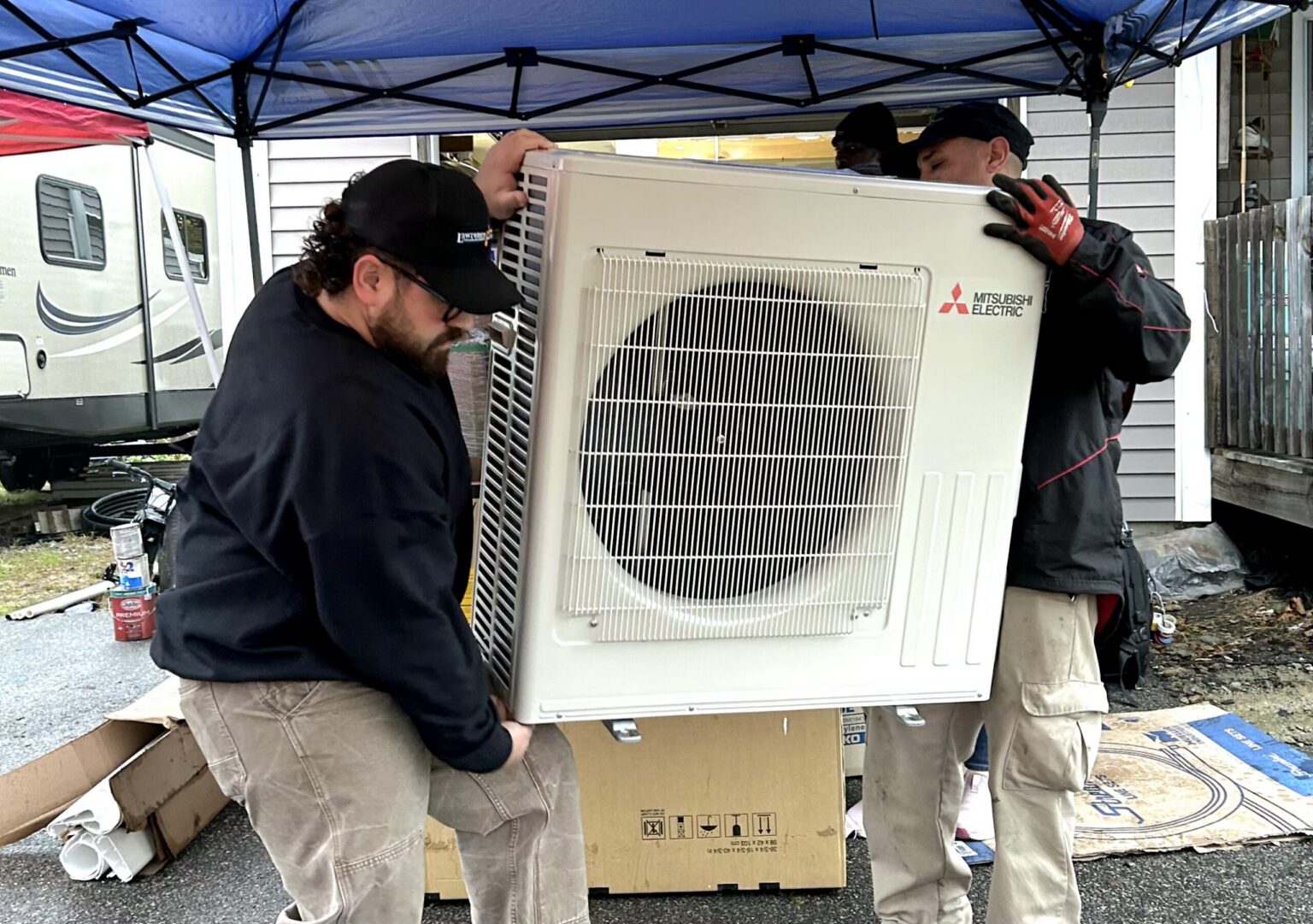
- Mitsubishi’s cold-climate lineup is central to Lawrence Air Systems’ installs, backed by our status as a Diamond Contractor Elite.
- Ductless systems solve specific problems well: rooms without ductwork, additions, and stubborn hot and cold zones. They’re not automatically the right fit for every home.
- Correct sizing and zone planning matter more than the number of indoor heads you install.
- 2026 incentives run through Mass Save (Massachusetts). No federal tax credit applies to 2026 installations.
If you’ve talked to a neighbor about ductless heat pumps, you’ve probably heard some version of the same question: do these things actually work when it’s below freezing, or are they really just a fancy air conditioner? It’s a fair question. Older heat pump technology genuinely struggled in cold climates, and that reputation has stuck around longer than the technology itself.
The short answer: modern cold-climate mini-splits, including Mitsubishi’s current lineup, are built specifically for winters like the ones we get across Rhode Island and Southeastern Massachusetts. The technology has changed enough that the old assumptions are worth revisiting.
The Question Every New England Homeowner Asks About Mini-Splits
The concern usually comes down to this: a heat pump moves heat from outside air into your home, and outside air in January doesn’t feel like it has much heat left to give. That logic made sense with older equipment. It matters less with systems engineered to keep extracting usable heat at much lower outdoor temperatures than a standard heat pump was ever designed to handle.
It’s also worth separating two different things people often lump together: whether a heat pump can heat a home in winter at all, and whether it can do so efficiently at very low temperatures. Cold-climate models are built to answer both questions the same way: yes.
How Cold-Climate Heat Pump Technology Actually Works
ENERGY STAR’s overview of ductless mini-split systems explains the basic mechanism: an outdoor compressor extracts heat from outside air and moves it inside through refrigerant lines, with no ductwork required. What separates a cold-climate model from a standard one is the compressor technology, variable-speed compressors that can ramp up capacity as temperatures drop, rather than the single-speed compressors that struggled in older systems.
A single-speed compressor essentially has two settings: on and off. When it’s cold outside and the system can’t keep up, the only option is to run constantly and hope, or fall back on supplemental electric resistance heat, which is expensive to run. A variable-speed compressor instead ramps its output up and down continuously, extracting more heat when it’s colder outside and settling into a lower, efficient output when demand eases. That distinction is most of what separates “heat pumps struggle in the cold” from “heat pumps built for the cold.”
What “Cold Climate Rated” Really Means
This is where a lot of marketing gets vague, so it’s worth being specific. NEEP’s cold-climate heat pump product list, maintained by the Northeast Energy Efficiency Partnerships, a regional authority utilities and states rely on for this exact question, sets the bar for what actually qualifies as a cold-climate system. Equipment on that list has to maintain a coefficient of performance of at least 1.75 at 5°F, meaning it’s still delivering meaningfully more heat energy than the electricity it consumes even at that temperature.
That’s a real, verifiable performance threshold, not a label a manufacturer applies on its own. When a system is described as cold-climate rated, it has met a specific, testable standard developed for exactly the kind of winters New England homeowners are asking about.
Why Homeowners Across the Region Choose Ductless for Fall and Winter
Deciding whether ductless makes sense for your home takes more than a general sense that heat pumps are efficient. It takes an actual look at your layout, your existing heating setup, and which rooms are giving you the most trouble. This is why homeowners across East Bay, Aquidneck Island, Jamestown, and out to Westport rely on the experienced team at Lawrence Air Systems to evaluate ductless heat pump systems for their specific home, rather than assuming one answer fits every house on the block. It’s the same reason homeowners across Rhode Island and Southeastern Massachusetts have trusted Lawrence Air Systems for heating decisions that need a straight answer, not a sales pitch.
Where Ductless Systems Make the Most Sense in a New England Home
Ductless isn’t an all-or-nothing replacement for a whole-home system in every case. It tends to solve specific, common problems especially well.
Rooms that never had ductwork. Additions, converted attics, and finished basements are frequently the coldest, most uncomfortable rooms in a house simply because extending ductwork to them was impractical or prohibitively expensive when the rest of the home was built.
Persistent hot and cold zones. In homes where one thermostat is trying to manage multiple floors, upstairs bedrooms often run hot while a first-floor addition runs cold. A ductless zone gives that specific area its own control instead of fighting the rest of the house.
Older homes with baseboard or radiator heat. These homes often have no cooling at all and no existing ductwork to add it through. Ductless systems provide both heating supplement and summer cooling without opening up walls.
Supplementing an existing system. Rather than replacing a whole-home system, a ductless unit can specifically target the one or two rooms that never perform as well as the rest of the house.
The Mitsubishi Diamond Contractor Elite Advantage
Mitsubishi Electric is one of the primary brands behind the cold-climate mini-split category, and it’s the manufacturer we install most often for this exact application. As a Mitsubishi Diamond Contractor Elite, Lawrence Air Systems installs their equipment under a 12-year warranty, well beyond the industry standard of 5 years, on top of our own 2-year labor warranty on every install.
That combination matters more with cold-climate equipment than with standard systems, since it’s asked to work harder during the exact conditions where a failure would be most disruptive. A warranty is only as useful as the contractor standing behind it, which is part of why the installer’s manufacturer designation is worth paying attention to, not just the equipment brand itself.
Sizing and Zoning: Why Bigger Isn’t Better
A mini-split sized larger than a room actually needs will short-cycle, turning on and off frequently instead of running efficiently at a lower, steady output. That’s the opposite of comfort and the opposite of efficiency. The right approach is a room-by-room evaluation, not a single number applied across every space.
This is also where zoning decisions matter. How many indoor heads you need, and where, depends on how your home’s problem areas are actually laid out, not a generic ratio of heads to square footage. A single well-placed head handling one persistently cold room often solves the actual problem better than a larger multi-zone system installed without that room-by-room analysis.
Our Annual Maintenance Program also plays a role here. Cold-climate systems that get regular professional attention hold their rated performance longer than systems left alone until something goes wrong, particularly since outdoor units run hard through an entire New England winter.
What Living With a Cold-Climate Mini-Split Actually Feels Like
Beyond the technical performance question, day-to-day comfort is what most homeowners actually care about. Modern indoor units run quietly enough that many homeowners forget they’re running at all. Most systems include a remote control and, on many models, a smartphone app, so adjusting a specific room’s temperature doesn’t require walking to a thermostat on another floor.
Because each zone operates independently, a bedroom can run cooler at night while a living room stays warmer during the evening, without one thermostat trying to compromise between the two. That kind of room-by-room control is difficult to replicate with a single ducted system, cold-climate or not.
What a Ductless Installation Typically Looks Like
A single-zone mini-split addressing one problem room is often a one-day installation, since it only requires running a refrigerant line and a small conduit through an exterior wall rather than any ductwork. Multi-zone systems, covering several rooms from one outdoor unit, take longer and benefit from the same kind of upfront planning as a full heating system replacement.
A typical process starts with an in-home evaluation of the specific rooms in question, a room-by-room heat loss assessment to determine correct sizing, and a walkthrough of indoor unit placement options before any installation date is set. Fall is a practical time to schedule this kind of project, since it gives a new system time to prove itself before the coldest stretch of winter arrives.
Rebates and Financing for Ductless Systems in 2026
As with any heating equipment decision in 2026, it’s worth being clear about what’s actually available: the federal 25C tax credit expired for equipment installed after December 31, 2025, so it does not apply to a 2026 ductless installation, regardless of what older sources might suggest.
What is currently available:
- Massachusetts homeowners can look into Mass Save’s heat pump rebate program, which covers both ducted and ductless systems that meet cold-climate eligibility criteria.
- Financing through Wells Fargo Bank, N.A. is available for homeowners who’d rather spread the investment over time than pay for it all upfront.
Mitsubishi is one of several equipment lines we install, and comparing options against current rebate eligibility is part of a proper consultation rather than an afterthought.
Frequently Asked Questions
Do ductless heat pumps really work in cold New England winters?
Cold-climate-rated models use variable-speed compressor technology specifically engineered to keep producing heat well below freezing, unlike older single-speed heat pumps that struggled once temperatures dropped.
What does “cold climate rated” mean for a mini-split?
It means meeting NEEP’s cold-climate specification: a coefficient of performance of at least 1.75 at 5°F. That’s a specific, testable performance threshold, not a marketing term a manufacturer can apply on its own.
Can a Mitsubishi mini-split replace my whole heating system?
Sometimes, but not always. It depends on your home’s layout and existing heating setup. For many homes, ductless works best solving specific problem areas rather than replacing an entire whole-home system at once.
How many mini-split heads does my home need?
That depends on room-by-room heat loss, not a general formula based on square footage. Oversizing causes the system to short-cycle and lose both comfort and efficiency.
What rebates are available for ductless heat pumps in 2026?
Massachusetts homeowners can look into Mass Save’s rebate tiers for cold-climate-eligible systems. No federal tax credit applies to 2026 installations, so state and utility programs are the primary incentive available.
How long do Mitsubishi ductless systems last?
Typically 10 to 15 years with regular maintenance. Mitsubishi’s warranty through Lawrence Air Systems extends to 12 years, well beyond the 5-year industry standard.
Do mini-splits work for cooling too?
Yes. The same system that heats in winter provides efficient cooling in summer, which is part of why they’re a popular single-system solution for homes without existing ductwork.
What maintenance does a ductless heat pump need?
Regular professional attention keeps a cold-climate system performing at its rated capacity, particularly through demanding winter conditions when the outdoor unit is working hardest.
A System Built for This Climate, Not in Spite of It
The technology behind cold-climate mini-splits has moved well past the reputation older heat pumps left behind. If you’ve been wondering whether a Mitsubishi ductless system could actually handle a New England winter in your home, the trusted team at Lawrence Air Systems can walk through what makes sense for your specific layout, no guessing required.
Call(401) 227-5410 to connect with a system designer and explore ductless options for homeowners across East Bay, Aquidneck Island, Jamestown, and out to Westport.