
The bathroom is the most humidity-stressed room in any home. Every shower, every bath, every running faucet generates moisture — and that moisture has to go somewhere. In a well-ventilated bathroom, it’s exhausted outside. In a bathroom with inadequate ventilation, it settles into every surface it can reach.
The damage that follows is usually gradual and easy to underestimate until it becomes expensive. Lawrence Air Systems has been helping Rhode Island and Southeastern Massachusetts homeowners resolve bathroom ventilation and air quality problems since 1973. This page covers the four most common warning signs we encounter, what causes them, and what a proper solution looks like.
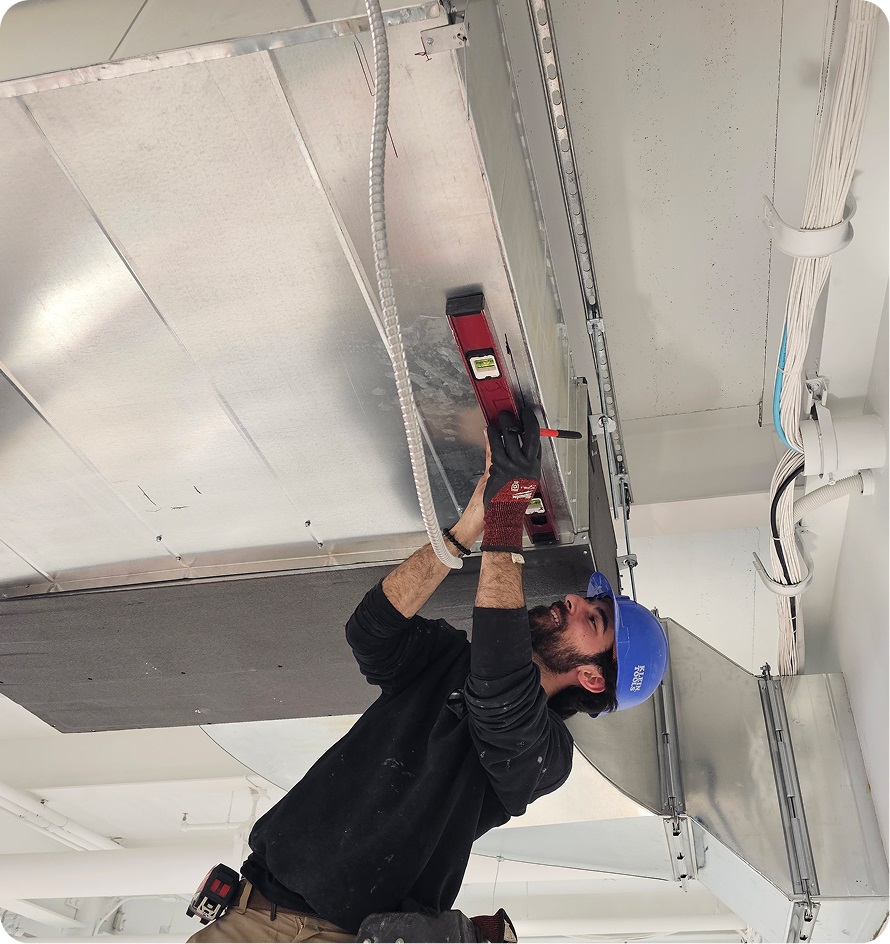
These are the most visible signs that your bathroom’s moisture levels have been elevated long enough to cause structural damage — and they often appear years before a homeowner connects them to a ventilation problem.
A single 10-minute hot shower can push relative humidity inside a bathroom to 90 percent or higher. If that moisture has nowhere to go — because the exhaust fan is undersized, clogged with dust, venting into the attic rather than outside, or simply never run long enough — it condenses on walls and ceilings and works its way behind the paint film, into drywall, and into wood framing and trim.
The ceiling is typically the first place paint fails. Warm steam rises and condenses on the coolest surface in the room. From there, moisture works laterally into walls and downward into trim and cabinetry. The progression is predictable: first the paint bubbles or peels, then the drywall softens, then wood trim warps, then framing begins to deteriorate.
Proper bathroom ventilation — confirmed live and exhausted to the outside, not into the attic — is the foundation of preventing this damage. But ventilation alone has to be adequate for the room size. An undersized fan running for five minutes after a shower doesn’t clear the moisture load a 20-minute shower produces.
Bathroom odors, pet dander, allergens, and household cooking vapors all end up in the same air your HVAC system circulates. When your forced-air system is running, it pulls air from throughout the home — including the bathroom — and redistributes it. A bathroom that generates humidity and odors contributes those conditions to your whole-home air quality.
Whole-home air purification systems address this at the source: inside the ductwork, before air is redistributed. Lawrence Air Systems installs the iWave and REME HALO in-duct air purification systems — both of which treat air passing through your HVAC system continuously, without filters to replace on a frequent schedule.
The Annual Maintenance Program keeps these systems properly serviced alongside your HVAC equipment — so performance doesn’t degrade quietly between visits.
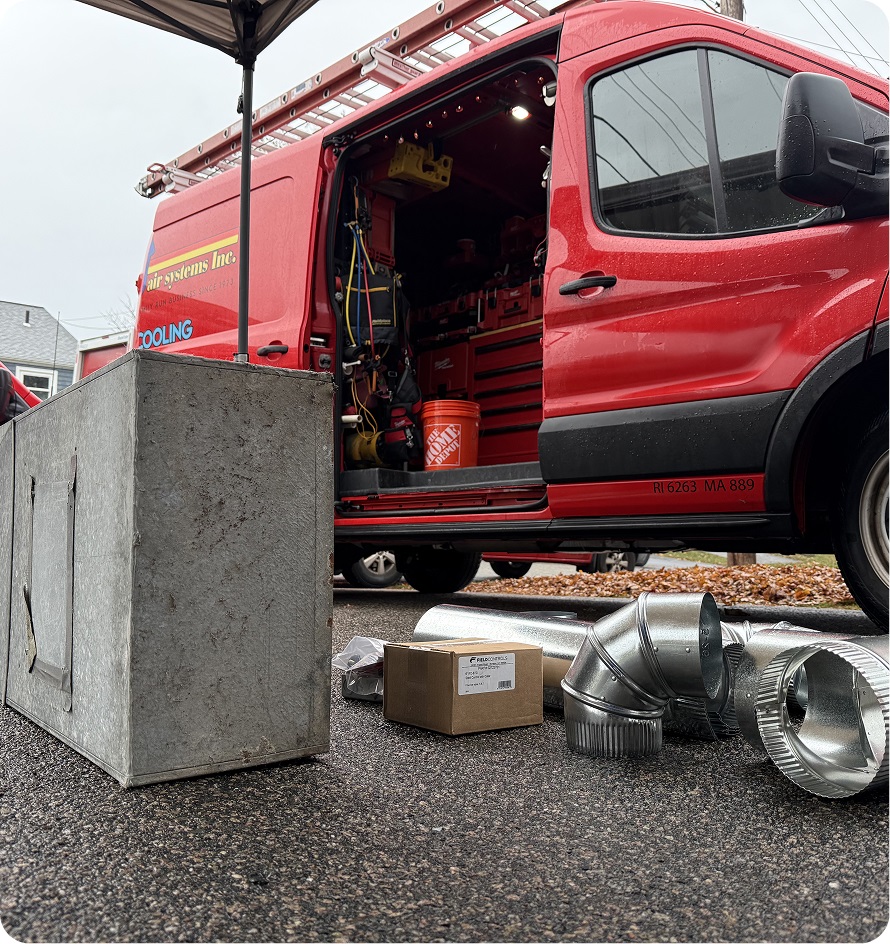
The four warning signs above — moisture damage, air quality, vent imbalance, and cold floors — are each addressable on their own. But they sometimes point to underlying system conditions that a single-room fix won’t fully resolve.
A bathroom that persistently struggles with humidity despite an adequate fan may be symptomatic of whole-home humidity that the HVAC system isn’t managing. A bathroom with persistent odors despite good ventilation may indicate a duct system that needs attention throughout the home. A bathroom that’s always too cold may reflect a broader zoning imbalance across multiple rooms.
This is why homeowners across East Bay, Aquidneck Island, Jamestown, and out to Westport rely on the experienced team at Lawrence Air Systems for a full-system view rather than a room-by-room patch. We assess the bathroom in the context of the whole home — because that’s usually where the right answer is found.

Fan use matters, but so does duration, fan capacity, and where the duct vents. If the fan is undersized for the room, venting into the attic instead of outside, or if it’s only run during the shower rather than for 15 to 20 minutes afterward, moisture is still accumulating behind surfaces. A professional evaluation can identify whether the fan, the duct routing, or the run time is the limiting factor.
Yes. Water vapor is a gas — it moves through drywall and into adjacent spaces via vapor diffusion and air movement. Closets sharing a wall with a high-humidity bathroom, attic spaces above an unventilated bathroom, and rooms below a bathroom with a slow leak are all commonly affected. The damage in adjacent spaces is often hidden until it’s significant.
Both are in-duct whole-home air purification systems installed inside your HVAC ductwork. The iWave uses needlepoint bipolar ionization to neutralize pathogens, allergens, and odors. The REME HALO generates ionized hydrogen peroxide plasma that charges airborne particles so they clump together and are captured by your system filter. Both treat air in every room your HVAC serves. Our technicians can walk you through which is better suited to your system and your household’s specific air quality priorities.
Electric radiant heating works well under tile, stone, and most hard flooring surfaces. It is not typically compatible with thick carpet or floating hardwood without specific manufacturer guidance. For bathroom applications — where tile or stone is the most common surface — radiant heat is straightforward to install. Our team can confirm compatibility with your specific flooring type during the consultation.
The simplest check is to go to your attic or exterior and confirm where the duct from the bathroom fan terminates. It should exit through the roof or an exterior wall — not terminate freely in the attic space. An improperly terminated bath fan is one of the most common ventilation findings in New England home inspections, particularly in older homes. If you’re not sure, a technician can confirm during a service visit.
Stuffiness with the fan running usually indicates a pressure problem — the room isn’t getting enough makeup air to replace what the fan is exhausting. This is common in tightly sealed homes. The fix may be as simple as leaving the bathroom door slightly ajar while the fan runs, or it may require ductwork or register adjustments to properly balance the room’s supply and return airflow.
Yes. Because iWave and REME HALO systems treat air as it moves through your HVAC ductwork, they address odors, allergens, and particles in every room your system serves — not just the room where the odor originates. For households with pets, this is one of the most effective whole-home odor reduction approaches available.
Call (401) 227-5410 to schedule a complimentary in-home consultation. Lawrence Air Systems serves homeowners throughout East Bay, Aquidneck Island, Jamestown, and out to Westport. Annual Maintenance Program members receive priority scheduling.
The experienced team at Lawrence Air Systems is ready to help Newport homeowners with cooling system installations, repairs, and maintenance across Aquidneck Island and the surrounding communities. Clear options, no pressure decisions, and equipment matched to the real demands of coastal Rhode Island.
Call (401) 227-5410 or request a service online. If we miss your call, you’ll hear back by our next business day.
Lawrence Air Systems — Serving Newport, RI and Aquidneck Island since 1973.